Treatments
Tooth extractions
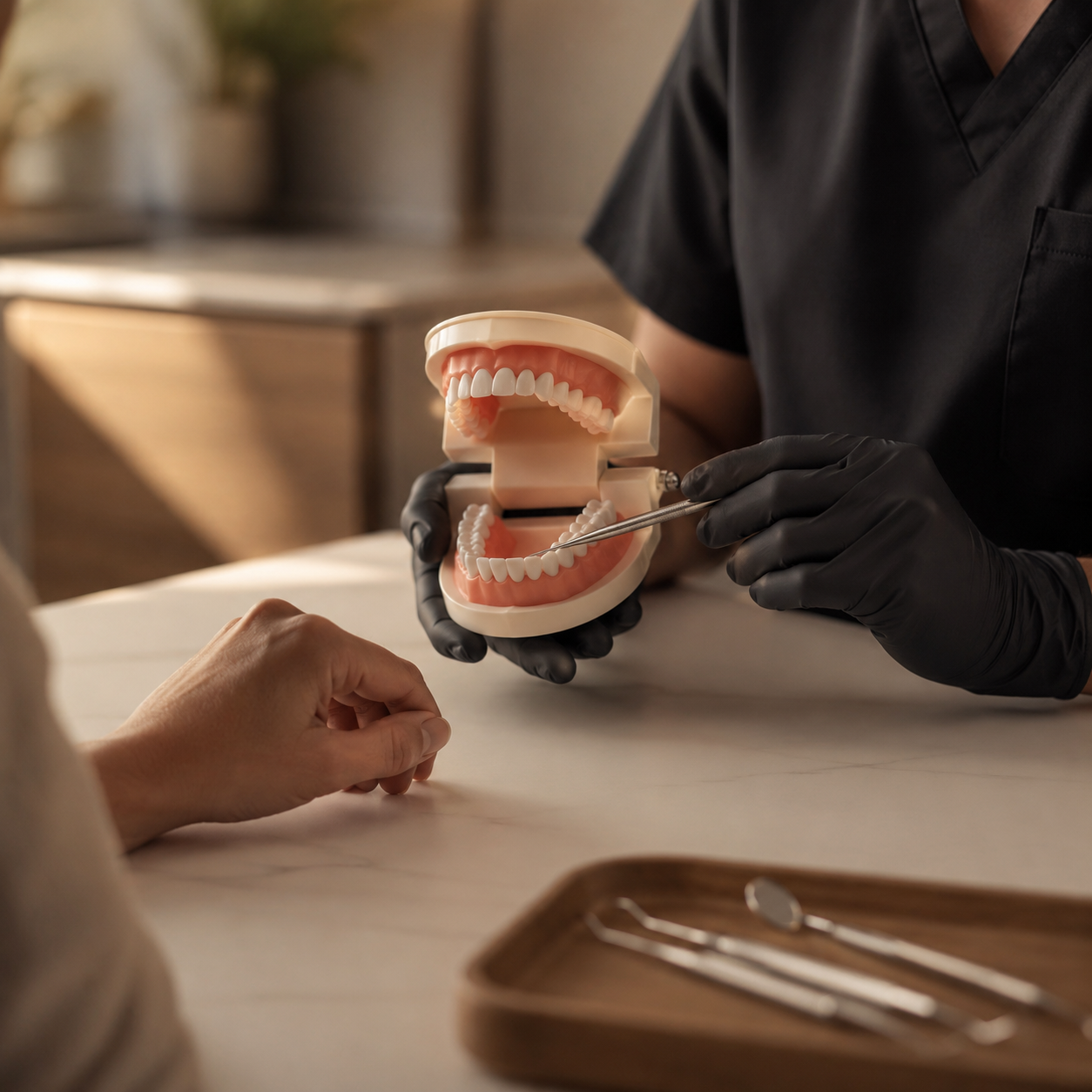
Removing a tooth is the last option rather than the first, and the conversation should start with whether it can be saved. When it genuinely does need to come out, the aim is a straightforward appointment and an uneventful recovery.
- Anaesthetic
- Local, sedation optional
- Appointment
- Usually under an hour
- Recovery
- Sore for a few days
- Aftercare
- Written, plus a number to call
Can it be saved instead?
That is the first question, and it deserves a proper answer rather than a shrug. Your own tooth is almost always better than anything that replaces it, so a root canal or a crown is worth discussing before an extraction is agreed.
Equally, there are teeth where saving them means spending substantially on something unlikely to last. You will get an honest read on which situation you are in, including roughly what each path costs, so you can decide rather than be steered.
When removal is usually the right call
- Decay too extensive for a filling or crown to hold
- A tooth fractured below the gum line
- Advanced gum disease with too little supporting bone left
- A tooth causing repeated infection
- Crowding, where removal is part of an orthodontic plan
Here about wisdom teeth?
They come with their own considerations, particularly impaction and how close the roots sit to the nerve, so they have a page of their own covering when they need removing and when they are better left alone.
Aftercare, in order
Most complications after an extraction are avoidable, and nearly all of them come down to protecting the clot in the first few days.
- 01
The first few hours
Bite gently on the gauze to let a clot form, and leave it alone. Avoid rinsing, spitting and hot drinks for the rest of the day. A little oozing is normal.
- 02
The first few days
Soft food, cold packs for swelling, and ordinary pain relief. No smoking and no straws, both of which can dislodge the clot and cause a dry socket.
- 03
Keeping it clean
Gentle salt water rinses from the day after, and keep brushing the rest of your teeth normally. Cleanliness matters, force does not.
- 04
When to call
Pain that worsens after day three, swelling that spreads, fever, or bleeding that does not settle. These are worth a phone call rather than waiting it out.
When I refer rather than treat
Straightforward extractions are done here. Surgically complex cases, roots sitting close to the nerve, significant medical complications, or anything better done under general anaesthetic go to an oral surgeon. You will hear that at the assessment rather than partway through an appointment.
Frequently asked questions
Get the tooth assessed first
Before assuming it has to come out, let me look. If it can be saved sensibly, that is usually the better answer. If you are in pain now, call rather than booking online.